Frigid temperatures, dangerous ice storms, and record snowfall blanketed the east coast this winter. Schools closed for days, accidents snarled traffic for miles, and thousands lost power. Horse racing was cancelled and daily training ceased. Winter weather inconvenienced millions of people and caused problems for horsemen at race tracks and area horse farms.
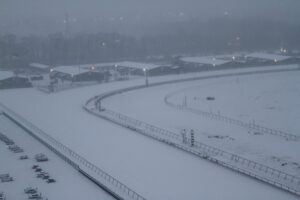
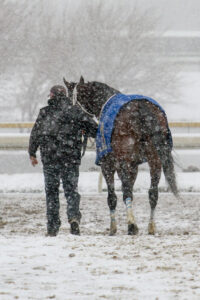 For horsemen, freezing temperatures cause a multitude of problems including broken water pipes, frozen water buckets, and rock-hard ground. “This has been the worst winter we’ve had in a long time. We’ve had the most snow since 1996,” said Parx horse trainer, Eddie Coletti, Jr. “The snow isn’t the hardest part of the winter though, it’s these freezing cold temperatures for a prolonged period of time. The cold is hard on everyone trying to work outside in this weather. We are fortunate though because the new barns at Parx are insulated and our water buckets only froze once when the wind chill temperature was below zero. We had to thaw everything out. After a snowfall, the track closed until they got it cleared and plowed the horse path. We had to walk the horses for a few days, but we got through it,” said Coletti. “Track maintenance did a great job with the track, so we only lost a few days of racing and training. Luckily, a huge shipment of salt arrived just in time,” Coletti said.
“I think the cold is harder on the people than on the horses. In my opinion, the horses seem to enjoy the cold more than the heat. They aren’t bothered by bugs, and they seem to be more energetic,” Coletti said.
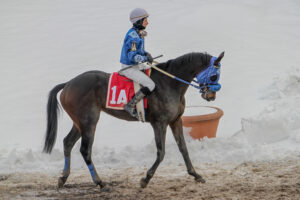
“The jockeys really have a difficult time in the frigid weather because they can’t dress warmer. They can’t add layers of clothing or wear heavier clothes or wear warmer gloves because they have to make weight. In the cold, jockeys can’t move as fast either, so they have trouble controlling their horses if they act up. This has been a tough winter for everyone, but hopefully, the worst is over,” said Coletti.
 Horses at race tracks and horse farms face physical problems due to cold temperatures. Because of reduced water intake during extreme cold temperatures, horses have a greater chance of dehydration and possible colic during the winter, and horse racing in extreme cold causes an increased risk of respiratory stress that increases the risk of EIPH, or bleeding from the lungs.
Horse farms prepare for cold temperatures and snow by insulating pipes, checking power sources, and fueling tractors, plows and snow blowers. Due to prolonged cold, horsemen at breeding farms and training facilities face hardships that include paddocks and fields covered with ice-crusted snow, confined horses, and below zero temperatures.
 At Equistar Training and Breeding Farm in Annville, PA, owner Rodney Eckenrode copes with the weather by turning his horses out in the indoor arena and lunging his stallions. Foals born during a cold snap need to be kept warm and dry and away from drafts. Tiny ears are susceptible to frost bite.
Also inconvenienced by winter weather, horse transportation companies deal with snow-clogged driveways, icy roads, and snow drifts. Van drivers are plagued by dead batteries, white-out conditions, and high winds that disrupt their transportation schedules.
The harsh winter weather caused problems and challenges for horses and horsemen in the north east, but days grow longer and racing continues.